

You got the promotion. You nailed the presentation. The feedback was good, genuinely good, and for about eleven seconds you let yourself feel it. Then the reframe kicked in: they were being generous, the bar was low, you got lucky with the timing, and honestly anyone could have done what you did. The win happened. Your belief about yourself didn’t move an inch. If that loop sounds familiar, you’re not dealing with a confidence problem. You’re dealing with something far more specific, and understanding the difference is where imposter syndrome work actually starts.
The Clance Framework: Why “You’re Not Alone” Doesn’t Fix It
Psychologists Pauline Clance and Suzanne Imes named this pattern in 1978, calling it the Impostor Phenomenon. Their original clinical work focused on high-achieving women who, despite clear external evidence of competence, were convinced they had fooled the people around them and lived in fear of being found out.1 The term eventually escaped the academic literature and went viral in the way psychology concepts do, which is both good and a little unfortunate.
Here’s the unfortunate part: the popularized version of the story became a reassurance campaign. Magazine pieces and workplace wellness talks frame it as a near-universal experience, something comforting to normalize. “Everyone feels like a fraud sometimes” is true the way “everyone gets tired” is true. It addresses the loneliness of the experience without touching the mechanism that produces it. You feel less alone, and then on Monday morning the discounting kicks back in, right on schedule.
Clance and Imes weren’t describing a vague feeling of inadequacy. They were describing a specific cognitive operation: success gets processed through an external attribution filter (luck, timing, charm, low standards in the room), while doubt bypasses the filter entirely and gets logged as objective truth. That asymmetry is the actual problem. The popular reassurance narrative, as flagged in HBR’s synthesis of the research, tends to strip this cognitive mechanics framing in favor of comfort, which quietly reduces the intervention’s usefulness.2
The Discounting Machine: How Success Becomes Suspicious
Think of it as a broken accounting system. Every win gets audited for external causes before it can register as evidence of your ability. You stayed late, prepared obsessively, and delivered something genuinely strong. The accounting system logs it under “lucky circumstances” or “managed to fake it again.” The doubt you felt going in? That gets logged under “my accurate read of my own limitations.” Over time, the ledger never updates. No amount of performance evidence closes the gap because the system is designed to reroute it.
This is confirmation bias operating on self-relevant information, and it’s worth naming it that way. Confirmation bias isn’t about being dumb or stubborn. It’s a normal cognitive tendency to interpret new evidence in ways that fit existing beliefs. The problem is that when the existing belief is “I’m not as capable as people think,” every piece of evidence gets bent to fit. A failure confirms the belief directly. A success confirms it indirectly, because it means the deception worked, not the competence.
The Psychology Weekly synthesis of the research puts it cleanly: successes are discounted and attributed to luck or deception, while internal feelings of inadequacy are treated as ground truth.2 That framing matters because it tells you where to intervene. You don’t intervene at the feeling level by generating more positive feelings. You intervene at the attribution level, which is a different cognitive target entirely.
Here’s a quick self-check worth pausing on: when something goes well at work, what’s the first thought that arrives? Is it “I worked hard and executed well”? Or is it closer to “I was lucky” or “I probably won’t be able to repeat it”? If your track record shows consistent wins but the second category of thought keeps appearing, you’ve just watched the discounting machine operate in real time. That’s the Clance pattern. It’s not a mood. It’s a system.
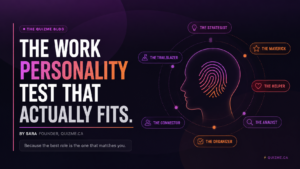
Feeling called out? Take the Work Personality quiz, it takes about 3 minutes.
The Family Story Behind It (And Why It Matters a Little Less Than You Think)
Clance’s clinical model points to developmental origins, specifically family dynamics that set up the pattern early. Common constellations include being the “smart one” in a family where that label carries a lot of weight, or being praised lavishly for achievements in ways that made success feel precarious and conditional rather than something built from internal capacity. Another pattern involves growing up in environments where doubt and self-criticism were modeled as the appropriate response to praise, because overconfidence was seen as dangerous or embarrassing.
The developmental framing is useful because it explains why the pattern feels so automatic. You didn’t choose the attribution system you’re running. It was installed early, reinforced over years, and by the time you’re navigating a career, it operates below conscious decision-making. But there’s an important caveat here, and the research reflects it: our research of work on this doesn’t resolve whether the developmental etiology or the situational one dominates.2 Some people develop the discounting pattern in specific achievement contexts without the family history. New environments, identity shifts, entering fields where you’re a visible minority, all of these can produce the same cognitive machinery without a predisposing family constellation.
This matters for intervention. If the origin is developmental, there’s useful work to be done in therapy around early patterns and internalized beliefs. If the origin is situational, the more direct cognitive interruption strategies tend to be more efficient. Either way, understanding the origin doesn’t automatically deactivate the mechanism. Insight is a starting point, not the fix itself. This is also why the attachment patterns you carry into adulthood often show up in how you relate to authority figures at work, which is a separate thread worth pulling.
Where Imposter Syndrome Hides at Work
It doesn’t always look like panic before a big presentation. The subtler versions are worth naming because they’re easier to miss and easier to rationalize as something else entirely. Over-preparation is one of them: if you spend three times longer on something than the task requires, and you tell yourself it’s just conscientiousness, that’s worth examining. The extra prep is often anxiety management masquerading as professionalism. The implicit logic is: if I cover every possible gap, there’s less chance anyone will see what I don’t know. That’s the fraud-prevention brain running the show.
Underpricing your work or expertise is another common form. Charging less than your rate, underselling your experience in conversations, hedging with “I’m not really an expert, but…” before saying something accurate and useful. There’s also the attribution pattern in real-time professional conversation: you deflect compliments reflexively, reroute credit to the team when individual recognition is accurate, or minimize accomplishments when someone else is describing them. These aren’t always humility. Sometimes they’re the discounting machine doing its housekeeping in public.
The pattern also shows up in how people relate to learning and not knowing things. Someone without the impostor pattern can say “I don’t know that yet” with relative neutrality. Someone running the discounting machine often experiences not knowing as dangerous, as confirmation of what they feared people would eventually discover. That’s why new roles, stretches, and transitions tend to spike the pattern hard. If you’ve noticed this in your own work life hitting a wall, the mechanism underneath may be closer to this than to actual burnout.
Three Cognitive Resets Worth Actually Trying
1. The Attribution Audit
This one is deliberately boring because it works by accumulation, not insight. After any positive outcome at work, write down two things: what external factors contributed, and what internal factors contributed. You’re not trying to eliminate external attribution. Luck and timing are real. You’re training the system to apply the same analytical standard to wins that it already applies to doubts. Most people running the discounting pattern are extremely precise about what went wrong and extremely vague about what went right. The audit forces precision in both directions. Do this for two weeks. The ledger starts to look different.
2. Evidence Inventory, Not Affirmations
Affirmations get mocked and mostly deserve it, because they ask you to assert things you don’t believe yet, which the discounting machine immediately dismisses as wishful thinking. An evidence inventory is different. It’s a running document of specific, verifiable outcomes: problems you solved, feedback that was direct and specific, decisions that held up over time. The specificity is what matters. “I’m good at my job” is a claim the machine will audit and reject. “I redesigned that process and cycle time dropped by two weeks” is a fact. The goal is to build a reference document that the attribution system has to argue with rather than dismiss.
3. Separating Performance Anxiety from Competence Assessment
These feel the same from the inside and are completely different things. Performance anxiety is a nervous system response to high-stakes situations. It’s physiological, it’s anticipatory, and it often shows up even when competence is high. Competence assessment is an actual evaluation of whether you have the skills for something. The Clance pattern fuses them: because I feel anxious before this, it must mean I’m not really capable of it. Practicing the explicit separation, naming it out loud, “I’m nervous, which is different from not being able to do this,” is a small cognitive interrupt that breaks the fusion over time.
When Imposter Syndrome Becomes Something Else
The overlap with burnout is worth addressing directly because the two get conflated in ways that lead people to the wrong interventions. Burnout, as Maslach’s three-component model describes it, involves a collapse of personal resources: exhaustion, cynicism, and reduced efficacy that comes from sustained depletion.3 The imposter pattern, by contrast, tends to preserve rather than collapse the self-concept. When the discounting machine runs well, failure stays external, attributed to being caught out or circumstances shifting, and the identity remains intact. “I fooled them and finally got caught” is a different experience than “I have nothing left to give.”
The Psychology Weekly synthesis makes an analytically interesting point here: burnout’s cultural popularity among millennials may partly reflect an identity-protective function.3 Burnout is a socially legible explanation that externalizes suffering. “I’m burned out” preserves the self-concept: capable person in a bad situation. “I’m an impostor who finally got found out” also externalizes the cause of the collapse, just differently. These are related but distinct cognitive moves, and they point to different places for intervention. Burnout work tends to involve resource restoration and situational change. Imposter work involves the attribution system directly.
The self-compassion question is thornier than it sounds. Self-compassion is broadly good, and the evidence for its role in countering harsh self-judgment is real. But the Psychology Weekly synthesis flags a specific tension in the Clance clinical model worth sitting with: if the impostor pattern is maintained by avoiding accurate self-assessment, then prioritizing self-acceptance over calibration could, in theory, reinforce the avoidance cycle.4 That’s not an argument against self-compassion. It’s an argument for pairing it with the evidence work described above. Kindness toward yourself and accuracy about yourself are not the same project, and the imposter pattern actually needs both.
Building an Accurate Self-Assessment (Not Just a Kinder One)
The goal isn’t to feel more confident. It’s to assess yourself with the same rigor you’d apply to anything else, which means your wins and your gaps deserve equal precision, not equal gentleness.
This is probably the hardest reframe in imposter syndrome work because it runs against the grain of most popular advice on the topic, which emphasizes feeling better. Feeling better is a legitimate goal. But the Clance mechanism isn’t primarily an emotional problem. It’s a calibration problem. The system is generating systematically inaccurate assessments of where your performance sits relative to your actual capabilities. The feelings are downstream of that inaccuracy, not the cause of it.
Accurate self-assessment means getting genuinely precise about both what you’re strong at and where you have real development gaps. It means being able to hold both without the presence of the gaps discrediting the strengths, which is what the discounting machine does. Someone who knows they’re excellent at synthesizing complex information and still learning stakeholder management is calibrated. Someone who focuses exclusively on the stakeholder management gap as evidence they shouldn’t be in the room is running the pattern.
The practical version of this involves actively seeking specific feedback rather than general reassurance. “You’re doing great” feeds nothing. “The way you structured that argument changed how I thought about the problem” is evidence. Learning to ask for and sit with specific positive feedback, without immediately discounting it, is a concrete skill. It feels awkward for exactly the reasons you’d expect. It’s also the kind of interruption that the attribution system can’t as easily reroute.
If you recognize the discounting machine in how you talk about your work, the Work Personality quiz can help you see which professional tendencies cluster around it. And if some of the early family patterns landed for you, the thread connecting those to how attachment shapes adult behavior is a worthwhile one to follow. The goal isn’t a perfect self-concept. It’s an accurate one, which turns out to be quite a lot more useful.
You’ve already done the things. The work now is letting the evidence count.
1 Clance, P. R., &, Imes, S. A. (1978). The impostor phenomenon in high achieving women: Dynamics and therapeutic intervention. Psychotherapy: Theory, Research &, Practice, 15(3), 241, 247.
2 Psychology Weekly Synthesis, 2026-04-30. Internal knowledge base synthesis referencing HBR popularization and Clance clinical model.
3 Psychology Weekly Synthesis, 2026-05-03. Internal knowledge base synthesis referencing Maslach MBI framework and burnout identity function.
4 Psychology Weekly Synthesis, 2026-05-03. Internal knowledge base synthesis on self-compassion and the Clance avoidance tension.