
Why You Use Toxic Traits Without Even Knowing It
Let’s be honest: you’ve probably rolled your eyes at a “dark triad quiz” before. You’ve seen the clickbait headlines, “Are You a Narcissist?” “Do You Manipulate People Without Trying?”, and thought, “Nope. I’m not that bad.” But here’s the twist: you’re not a villain. You’re not even close to clinical narcissism or psychopathy. What you are is human, and sometimes, that means using traits like manipulation, self-importance, or emotional detachment as survival tools. These aren’t signs of evil. They’re signs of adaptation. And that’s what makes them so hard to see: they’re not flashy, villainous behaviors. They’re quiet, everyday patterns that help you cope, protect yourself, and get by, without you ever realizing you’re doing it.
Think about it. When you’ve been dismissed, ignored, or emotionally overwhelmed as a kid, you might have learned to shut down, to play it cool, to “win” conversations by staying one step ahead. That’s not evil. That’s self-preservation. When you’ve been told your feelings don’t matter, you might have started to believe your needs are inconvenient, so you begin prioritizing others’ comfort over your own. That’s not kindness. It’s learned self-effacement. And when you’re constantly praised for being “the smart one,” “the reliable one,” “the one who gets things done,” you might start to believe you’re inherently better. Not because you’re arrogant, but because you’ve never been taught to feel worthy without achievement.
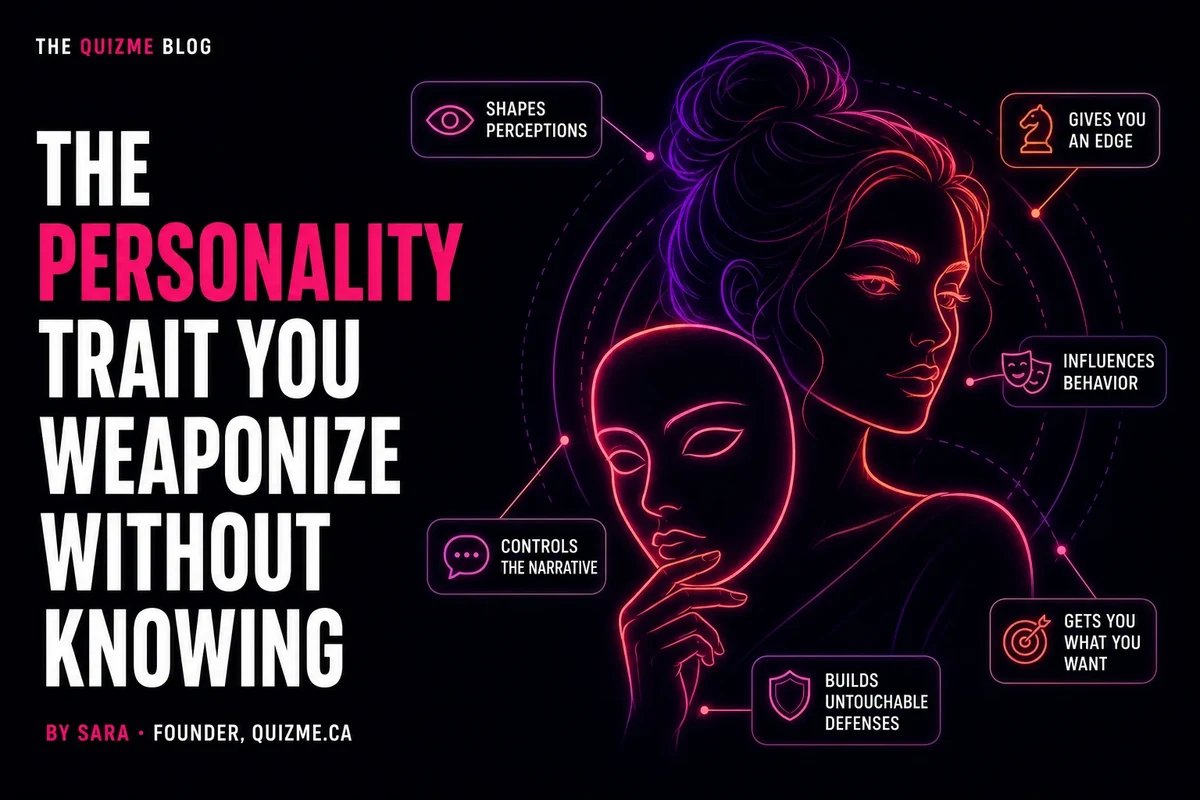
These aren’t personality disorders. They’re not even “dark” in the clinical sense. They’re subclinical. They live in the gray zone between healthy coping and self-destructive habit. And they’re the ones you weaponize without knowing it, because you think you’re just being smart, efficient, or strong. If you want to understand the full map of who you are, personality psychology gives you a much richer picture than any villain checklist.
How the Dark Triad Shows Up in Ordinary Lives
The dark triad, Machiavellianism, narcissism, and subclinical psychopathy, was first described as a unified personality framework by researchers Delroy Paulhus and Kevin Williams in 2002.1 They weren’t describing serial killers. They were describing patterns that show up in offices, group chats, and family dinners. These traits are called “dark” because they tend to involve a callous or manipulative interpersonal style, but the research is clear: they exist on a spectrum, and most people carry traces of all three.
Take Machiavellianism. It’s not about being cruel. It’s about being strategic. It’s the person who doesn’t react to a passive-aggressive comment because they know reacting only gives the other person power. It’s the one who remembers every small detail about a colleague’s preferences so they can subtly influence decisions. This isn’t manipulation in the cartoonish sense. It’s emotional intelligence turned inward, used to protect yourself from being taken advantage of.
Narcissism, too, is often misunderstood. It’s not just about grandiosity. It’s about self-protective self-importance. The person who says, “I don’t need anyone’s approval,” isn’t necessarily arrogant. They might be someone who was constantly criticized growing up, so they built a fortress around their self-worth. They act like they don’t care, because they’re afraid to care.
And subclinical psychopathy? It’s not about being violent. It’s about emotional detachment. The person who doesn’t get upset when someone cancels plans last minute. The one who can walk away from a fight without guilt. That’s not cruelty. That’s emotional insulation, a way of staying unshaken in a world that feels unpredictable and unsafe.
None of these traits are inherently toxic. They’re tools. But when they become your default, they stop being tools and start being traps. You use them to survive, but then you can’t turn them off. You start to believe that being cold is the only way to be strong. That being self-focused is the only way to be respected. That being strategic means you’re better than others.
Why These Traits Feel Like Strength, Until They Don’t
The paradox is real: the very traits that help you survive early life stress can sabotage your adult relationships. The Machiavellian who learned to read people’s emotions to avoid conflict now struggles to be vulnerable. The narcissist who built a shield of self-worth now can’t accept criticism without feeling attacked. The emotionally detached person who never showed pain now can’t feel joy without guilt.
The dark triad overall is negatively related to both agreeableness and conscientiousness in the Big Five model of personality, which means high scorers tend to be less cooperative and less reliable, even when they believe themselves to be neither.1 In workplace contexts, researchers have found that Machiavellianism tends to show up through excessive charm as a manipulation tool, narcissism through self-presentation and appearance, and psychopathy through intimidation and aggression.1 These aren’t dramatic. They’re everyday. They’re you, on a bad week, operating on autopilot.
But here is the critical piece: these aren’t personality flaws. They’re survival adaptations. When you’re constantly on guard, you learn to be strategic. When you’re ignored, you learn to be self-reliant. When you’re hurt, you learn to shut down. These responses aren’t bad, they’re necessary. But when the original threat is gone, when you’re safe, secure, and loved, they become outdated. And that’s when they start to hurt you.
That’s why the real danger isn’t the trait itself. It’s the lack of self-awareness. It’s not knowing that your “strength” is actually a coping mechanism. It’s not realizing that your ability to stay calm under pressure is built on emotional suppression. It’s not seeing that your need to be right is rooted in fear of being wrong.
What the Synthesis Actually Looks Like
The truth isn’t that you’re a monster. It’s that you’re a human who learned to survive. And now, you’re trying to live.
Think of it this way: your brain is like a car with a broken brake system. In the past, you had to drive fast and stay alert to avoid crashes. You learned to rely on speed, sharp turns, and constant vigilance. But now, you’re on a smooth highway. The brakes are still broken. And you’re still driving like you’re on a mountain road.
That’s what subclinical dark triad traits are: outdated survival systems. They were built for a world of threat and scarcity. But now, you’re in a world that has room for abundance and connection, and your old tools are no longer helping you access it. They’re blocking you from intimacy, from growth, from joy.
Worth noting: this mapping isn’t universal. Not everyone who scores high in Machiavellianism had a difficult childhood, and not every emotionally detached person is suppressing pain. Some people simply have a cooler baseline temperament, lower in the Big Five trait of agreeableness, higher in conscientiousness, and that’s just how they’re wired. The coping-mechanism story is a useful lens, not a universal diagnosis. The goal isn’t to pathologize every strategic thought you’ve ever had. It’s to create enough space between you and the pattern that you can actually choose.
The good news is that you don’t have to become someone else. You don’t have to “fix” yourself. You just need to recognize what you’re doing, and why.
Patterns Worth Trying: Self-Reflection Exercises
1. Reclaim Your Emotional Language (Easier)
Start by naming what you’re feeling, without judgment. When you feel the urge to shut down, pause and ask: “What am I afraid of right now?” When you feel the need to be right, ask: “Am I trying to prove something, or just protect myself?” Most people with high subclinical Machiavellianism are excellent at naming other people’s emotions and almost no practice at naming their own.
- Write down one time this week when you used a controlling or distancing behavior.
- Now write down what you were protecting yourself from.
- Write one way you could respond differently, without abandoning your actual boundaries.
2. Rebuild Self-Worth Outside Achievement
If you’ve built your identity on being “the best,” “the smartest,” or “the one who never fails,” you’ve tied your worth to performance. That’s exhausting, and it’s fragile. Narcissistic adaptation often feeds on conditional praise, the childhood message that you were valued for what you did, not who you were. The antidote isn’t false humility. It’s unconditional self-regard.
- Each day this week, do one thing you’re not good at, just for fun.
- Write down one thing you value about yourself that has nothing to do with your job, grades, or appearance.
Self-worth isn’t earned through perfection. It’s claimed through presence.
3. Reconnect with Vulnerability on Your Own Terms
Emotional detachment isn’t weakness. But it’s not strength either. It’s a choice that becomes a habit. And sometimes that habit is made out of fear so old you’ve forgotten what it was protecting you from. You don’t have to become emotionally porous to break this pattern. You just need one trusted person and one small, honest moment.
- Next time you’re with someone you trust, try saying: “I’m feeling a little unsure right now.”
- Share a small personal memory that doesn’t involve winning or proving anything.
Vulnerability isn’t the opposite of strength. It’s the foundation of actual connection.
4. Notice When Strategy Becomes Control (Harder)
Strategic thinking is genuinely valuable. The ability to read a room, anticipate conflict, and navigate competing interests is a real skill, one that shows up in strong leaders, thoughtful partners, and good friends. The problem is when strategy becomes a way to avoid feeling, rather than a way to engage more clearly. Before your next significant conversation, identify the specific outcome you’re aiming for and ask yourself: am I preparing to connect, or preparing to win? Then observe whether you shift your communication style based on the other person’s emotional cues, and note whether that shift serves genuine understanding or subtle control.
That deeper attention to your own patterns will tell you more about which trait you’re weaponizing than any quiz.
Feeling called out? Take the personality quiz, it takes about 3 minutes.
The Common Pitfall and How to Get Past It
The trap is thinking self-awareness means “fixing” yourself. You read something like this, you feel seen, and your brain immediately goes: “Okay, so I need to become more agreeable. More emotional. More open.” But that’s not what this is about.
The real goal isn’t to become someone else. It’s to become you, without the armor running on autopilot. It’s to stop using your traits as weapons and start using them as tools you actually pick up intentionally.
Your strategic mind? Not a flaw. A genuine gift. But instead of using it to outsmart people, it can be used to understand them. Your self-importance? Not arrogance, self-protection that has outlived its original threat. But now, you get to say: “I matter, and I’m allowed to care about others equally.” Your emotional detachment? Not coldness. A shield that maybe doesn’t need to be up all the time anymore.
The pitfall is thinking you have to erase your traits. The truth is you don’t. You just need to stop letting them run the show unconsciously.
The most powerful thing you can do isn’t to change who you are. It’s to stop pretending you don’t know what you’re doing.
What Self-Knowledge Is Actually For
Self-knowledge isn’t about labeling yourself. It’s not about fitting into a box, not a Big Five profile, not an MBTI type, not a dark triad score. It’s not about becoming a better version of a character from a personality quiz.
It’s about freedom.
When you know your patterns, you stop reacting from them. You start choosing. You stop being controlled by the past you survived and start being shaped by the present you’re actually living. That shift doesn’t happen all at once. It happens in small moments of recognition: “Oh. I’m doing the thing again.”
That’s the whole game. Not to become nice or soft or perfectly emotionally regulated. Just to be honest enough with yourself to notice when your survival strategies have become someone else’s problem, and yours too.
Because the traits you weaponize without knowing aren’t making you stronger. They’re just making you lonelier.
1 Paulhus, D. L., & Williams, K. M. (2002). The Dark Triad of personality: Narcissism, Machiavellianism, and psychopathy. Journal of Research in Personality, 36(6), 556, 563. https://doi.org/10.1016/S0092-6566(02)00505-6